 Österreich
(Die Abbildungen müssen nicht den tatsächlichen Produkten entsprechen)
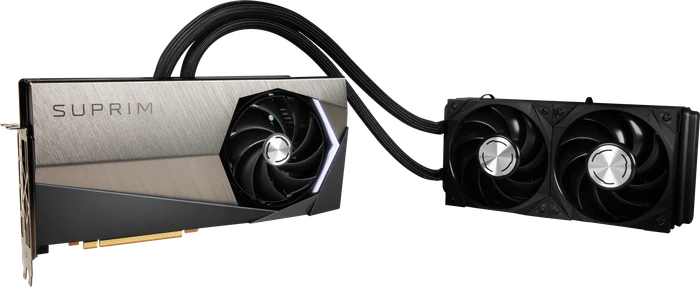
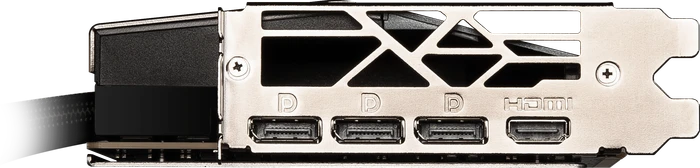
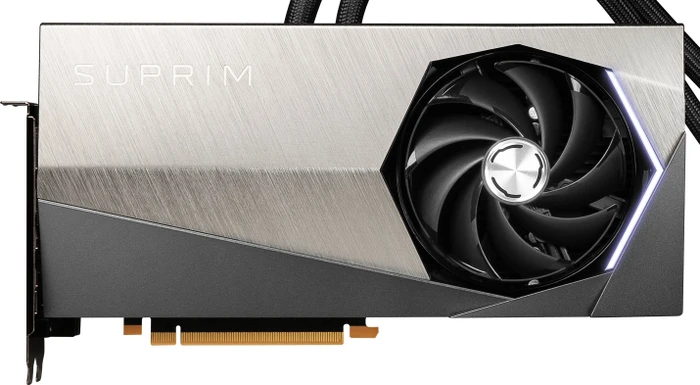
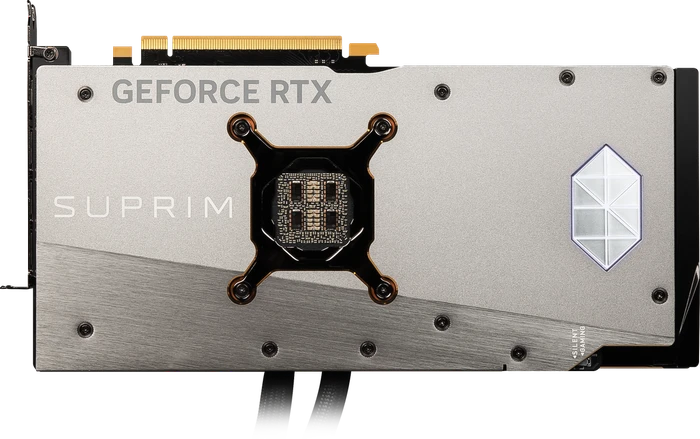
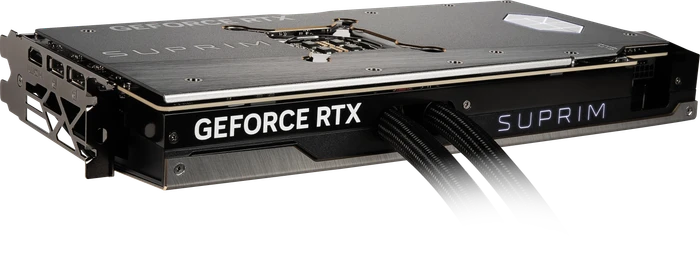
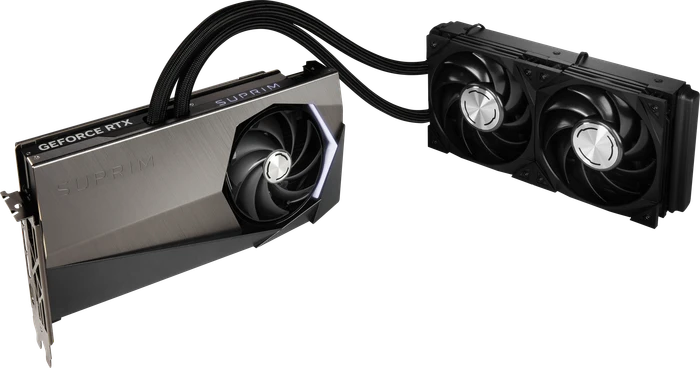
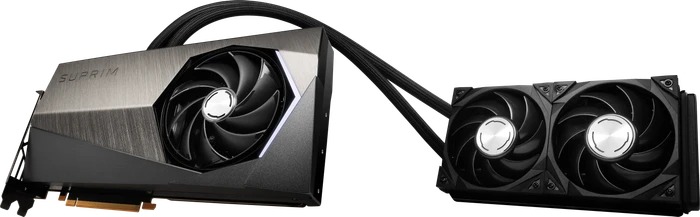
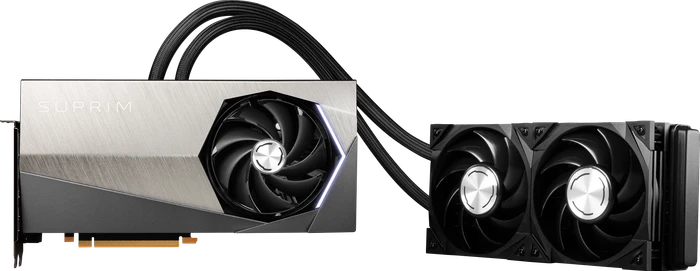
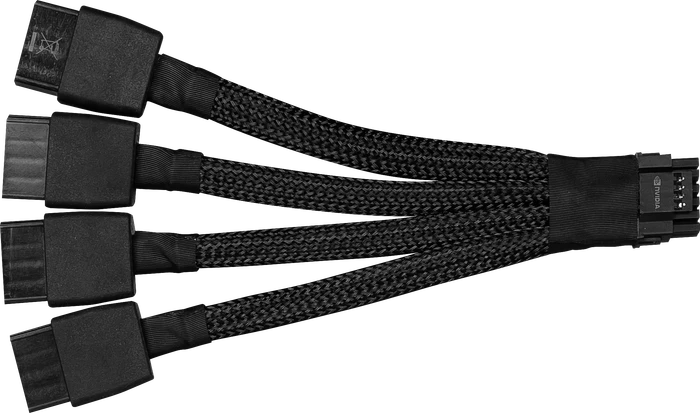
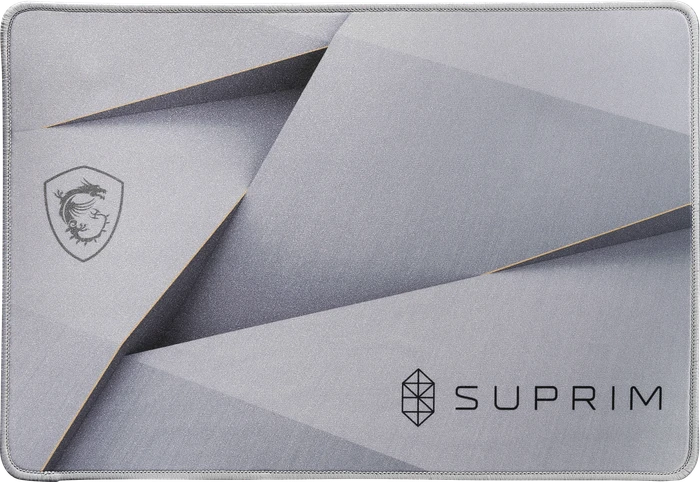
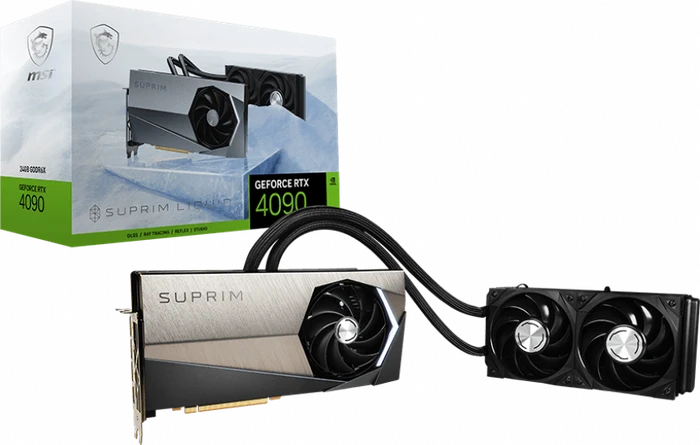


MSI GeForce RTX 4090 Suprim Liquid 24G, 24GB GDDR6X, HDMI, 3x DP
Alle 12 Varianten anzeigen
Wähle eine Variante:
 MSI GeForce RTX 4090 Suprim Liquid 24G, 24GB GDDR6X, HDMI, 3x DP
MSI GeForce RTX 4090 Suprim Liquid X 24G, 24GB GDDR6X, HDMI, 3x DP
MSI GeForce RTX 4090 Suprim Liquid 24G, 24GB GDDR6X, HDMI, 3x DP
MSI GeForce RTX 4090 Suprim Liquid X 24G, 24GB GDDR6X, HDMI, 3x DP
 MSI GeForce RTX 4090 Gaming Trio 24G, 24GB GDDR6X, HDMI, 3x DP
 MSI GeForce RTX 4090 Gaming X Slim 24G, 24GB GDDR6X, 2x HDMI, 2x DP
 MSI GeForce RTX 4090 Ventus 3X E 24G, 24GB GDDR6X, 2x HDMI, 2x DP
MSI GeForce RTX 4090 Ventus 3X E 24G OC, 24GB GDDR6X, 2x HDMI, 2x DP
Mehr Varianten anzeigen
MSI GeForce RTX 4090 Ventus 3X E 24G, 24GB GDDR6X, 2x HDMI, 2x DP
MSI GeForce RTX 4090 Ventus 3X E 24G OC, 24GB GDDR6X, 2x HDMI, 2x DP
Mehr Varianten anzeigen
Derzeit keine Angebote
um
€ 3789,99
1 Angebot
um
€ 5341,37
1 Angebot
um
€ 7077,61
1 Angebot
Derzeit keine Angebote
Derzeit keine Angebote
- Modell
- NVIDIA GeForce RTX 4090
- Speicher
- 24GB GDDR6X, 384bit, 21Gbps, 1313MHz, 1008GB/s
- Takt Basis
- 2235MHz (Standard-Profil), 2235MHz (OC-Profil)
- Takt Boost
- 2595MHz (Standard-Profil), 2610MHz (OC-Profil)
- Übertaktung
- +90MHz Boost (OC-Profil), +75MHz Boost (Standard-Profil)
- Kühlung
- Komplettwasserkühlung (AiO), 1x Axial-Lüfter (100mm) mit 0dB-Zero-Fan-Modus, 240mm-Radiator mit 2x Lüfter
- TDP/TGP
- 450W (NVIDIA), max. 480W (MSI)
- Stromanschlüsse
- 1x 12VHPWR (via Adapter: 4x 8-Pin PCIe)
- Anschlüsse
- 1x HDMI 2.1a, 3x DisplayPort 1.4a
- Anbindung
- PCIe 4.0 x16
- Besonderheiten
- Beleuchtung (RGB), Backplate, AI-Beschleunigung, Taktprofile (Gaming Mode/Extreme Mode)
- Gesamthöhe
- Dual Slot
Werbung
Es gibt derzeit keine Anbieter für dieses Produkt
(mit diesen Filterkriterien).
Bitte ggf. die Filterkriterien ändern.
Bitte ggf. die Filterkriterien ändern.
Weitere Varianten (Top-10)
MSI GeForce RTX 4090 Suprim Liquid X 24G, 24GB GDDR6X, HDMI, 3x DP
V510-007R
um
€ 3789,99

MSI GeForce RTX 4090 Gaming Trio 24G, 24GB GDDR6X, HDMI, 3x DP
um
€ 5341,37
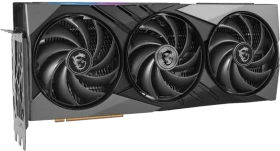
MSI GeForce RTX 4090 Gaming X Slim 24G, 24GB GDDR6X, 2x HDMI, 2x DP
um
€ 7077,61
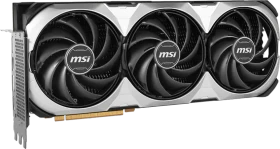
MSI GeForce RTX 4090 Ventus 3X E 24G, 24GB GDDR6X, 2x HDMI, 2x DP
MSI GeForce RTX 4090 Ventus 3X E 24G OC, 24GB GDDR6X, 2x HDMI, 2x DP
V510-271RMSI GeForce RTX 4090 Gaming X Slim 24G, 24GB GDDR6X, 2x HDMI, 2x DP
V510-263R
MSI GeForce RTX 4090 Ventus 3X 24G, 24GB GDDR6X, HDMI, 3x DP
V510-046RMSI GeForce RTX 4090 Ventus 3X 24G OC, 24GB GDDR6X, HDMI, 3x DP
V510-023R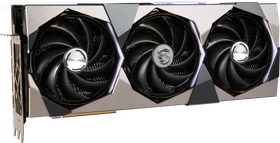
MSI GeForce RTX 4090 Suprim 24G, 24GB GDDR6X, HDMI, 3x DP
V510-034Ähnliche Produkte (Top-10 in PCIe)

ASUS Prime Radeon RX 9070 XT OC, PRIME-RX9070XT-O16G, 16GB GDDR6, HDMI, 3x DP
90YV0L71-M0NA00
ab
€ 793,54

ASUS ROG Astral GeForce RTX 5090 OC, ROG-ASTRAL-RTX5090-O32G-GAMING, 32GB GDDR7, 2x HDMI, 3x DP
90YV0LW0-M0NA00
ab
€ 5812,16

ASUS Dual GeForce RTX 5060 Ti OC, DUAL-RTX5060TI-O16G, 16GB GDDR7, HDMI, 3x DP
90YV0MH0-M0NA00
ab
€ 679,90

ASRock Radeon RX 9070 Challenger 16GB, RX9070 CL 16G, 16GB GDDR6, HDMI, 3x DP
90-GA5NZZ-00UANF
ab
€ 659,00

GIGABYTE Radeon RX 9070 XT Gaming OC 16G, 16GB GDDR6, 2x HDMI, 2x DP
GV-R9070XTGAMING OC-16GD
ab
€ 848,99
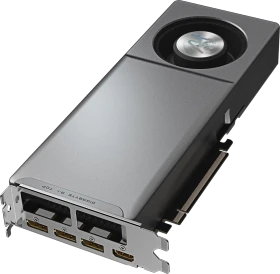
GIGABYTE Radeon AI PRO R9700 AI TOP 32G, 32GB GDDR6, HDMI, 3x DP
GV-R9700AI TOP-32GD
ab
€ 1831,23
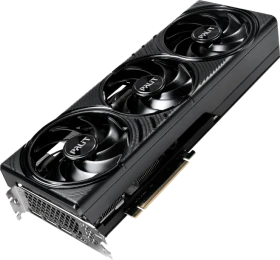
Palit GeForce RTX 5080 Infinity 3, 16GB GDDR7, HDMI, 3x DP
NE75080019T2-GB2035S
ab
€ 1596,59

ASUS Prime GeForce RTX 5070 Ti OC, PRIME-RTX5070TI-O16G, 16GB GDDR7, HDMI, 3x DP
90YV0MF0-M0NA00
ab
€ 1259,00
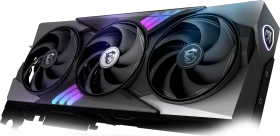
MSI GeForce RTX 5080 16G Gaming Trio OC, G5080-16GTC, 16GB GDDR7, HDMI, 3x DP
V531-005R
ab
€ 1666,43

XFX Swift Radeon RX 9070 XT Triple Fan Gaming Edition, 16GB GDDR6, HDMI, 3x DP
RX-97TSWF3B9
ab
€ 789,90
- Modell
- NVIDIA GeForce RTX 4090
- Speicher
- 24GB GDDR6X, 384bit, 21Gbps, 1313MHz, 1008GB/s
- Takt Basis
- 2235MHz (Standard-Profil), 2235MHz (OC-Profil)
- Takt Boost
- 2595MHz (Standard-Profil), 2610MHz (OC-Profil)
- Übertaktung
- +90MHz Boost (OC-Profil), +75MHz Boost (Standard-Profil)
- Kühlung
- Komplettwasserkühlung (AiO), 1x Axial-Lüfter (100mm) mit 0dB-Zero-Fan-Modus, 240mm-Radiator mit 2x Lüfter
- TDP/TGP
- 450W (NVIDIA), max. 480W (MSI)
- Stromanschlüsse
- 1x 12VHPWR (via Adapter: 4x 8-Pin PCIe)
- Anschlüsse
- 1x HDMI 2.1a, 3x DisplayPort 1.4a
- Anbindung
- PCIe 4.0 x16
- Besonderheiten
- Beleuchtung (RGB), Backplate, AI-Beschleunigung, Taktprofile (Gaming Mode/Extreme Mode)
- Gesamthöhe
- Dual Slot
- Abmessungen
- 280x140x43mm (LxBxH)
- Bauform
- PCIe-Karte (full height)
- Slotblende
- full height
- AI-Rechenleistung (dense)
- 660.5 TOPS (FP8), 330.25 TOPS (FP16)
- AI-Rechenleistung (sparse)
- 1321 TOPS (FP8), 660.5 TOPS (FP16)
- GPU-Rechenleistung
- 85.20 TFLOPS (FP16), 85.20 TFLOPS (FP32), 1.33 TFLOPS (FP64)
- Chip-Daten
- Chip-Architektur
- NVIDIA Ada Lovelace (ab 2022/Q3)
- Chip-Bezeichnung
- AD102 (AD102-300-A1/AD102-301-A1)
- Chip-Ausbau
- 88.9% aktive Recheneinheiten (128/144 SM)
- Chip-Konfiguration
- 128SM (16384SP/512TMU/176ROP), 128 RT-Cores, 512 Tensor-Cores, 72MiB L2-Cache
- Chip-Fertigung
- TSMC N5P [NVIDIA 4N] (5nm)
- Chip-Größe
- 609mm², monolithisch, 76.3 Mrd. Transistoren
- Chip-Funktionen
- Raytracing (3rd Gen NVIDIA RTX), NVIDIA Tensor (4th Gen, 330.25 TOPS), HDCP 2.3
- Chip-Verwendung
- GeForce RTX 4090
GeForce RTX 4090D
GeForce RTX 4070 Ti SUPER
RTX 6000 Ada
RTX 5880 Ada
RTX 5000 Ada
L40S
L40 - API-Unterstützung
- DirectX 12 Ultimate (12_2) / CUDA 8.9 / Vulkan 1.3 / OpenCL 3.0 / OpenGL 4.6 / Shader Model 6.7
- Transcoding-Engine
- 2x NVENC (8th Gen, max. Sessions: 8), 1x NVDEC (5th Gen), Info
- Encoding
- AV1 (YUV 4:2:0), H.265 (4K YUV 4:2:0 / 4K YUV 4:4:4 / 4K Lossless / 8K / HEVC 10bit support / HEVC B Frame support), H.264 (YUV 4:2:0 / YUV 4:4:4 / Lossless)
- Decoding
- AV1 (8bit / 10bit), H.265 (8bit 4:2:0 / 10bit 4:2:0 / 12bit 4:2:0 / 8bit 4:4:4 / 10bit 4:4:4 / 12bit 4:4:4), H.264 (8bit 4:2:0), VP9 (8bit / 10bit / 12bit), VP8, VC-1, MPEG-2, MPEG-1
- Multi-GPU-Anbindung
- -
- Veröffentlichung (Serie)
- 20.09.2022, Verkaufsstart: 12.10.2022, UVP: 1.599 USD (NVIDIA)
- Grafik
- NVIDIA GeForce RTX 4090 - 24GB GDDR6X - Desktop
- Segment
- Consumer
- Letztes Preisupdate
- -
- Gelistet seit
- 2022-09-21, 12:43
-
Stand: 12.10.2022 .pdf [1.03 MB]
-
Stand: 22.09.2022 .jpg [311.00 KB]
-
 nvidia.com: GeForce RTX 4090
-
computerbase.de: Die RTX GeForce 4090 im Gehäusevergleich
-
3dcenter.org: Launch-Analyse nVidia GeForce RTX 4090
-
pcgameshardware.de: DLSS 3 Frame Generation: Doppelte Arbeit für die CPU? Überraschende Ergebnisse!
-
computerbase.de: GeForce RTX 4090 und 4080: Wie geht die Rechnung von Ada Lovelace für Nvidia aus?
-
 nvidia.com: GeForce RTX 4090
Laden ...
Bewertung für MSI GeForce RTX 4090 Suprim Liquid 24G, 24GB GDDR6X, HDMI, 3x DP
Teilen Sie uns Ihre Meinung zu MSI GeForce RTX 4090 Suprim Liquid 24G, 24GB GDDR6X, HDMI, 3x DP mit oder lesen Sie die Bewertungen unserer Mitglieder, Experten und anderer Websites zu dessen Varianten.Laden ...
-
computerbase.de: Gaming-Performance des Ryzen 5 9600X & Ryzen 7 9700X
Wie schlagen sich die neuen CPUs Ryzen 5 9600X und Ryzen 7 9700X im Gaming auf einer Grafikkarte vom Typ Radeon RX 7900 XTX im Vergleich zur GeForce RTX 4090? Wie reagieren die CPUs auf schnelleren Speicher bis hinauf zu DDR5-8000 in Spielen? Der Test liefert die Antworten.

-
overclockers.com: Nvidia RTX 4090 Review: MSI’s Suprim Liquid X Tames Ada Lovelace (translate)
Wrapping things up, Nvidia hit a home run with performance. From the raw raster improvements to DLSS 3.0, FPS hasn’t been higher, and graphics cards incredibly capable. However, that comes at a price. On the front end, an RTX 4090 costs you around $1499 dollars for an FE version, more for custom high-end models like the Suprim, Strix, and Aorus from card partners. The other side where it can bite you is with power consumption and heat. With power use reaching 450W (and more) the cards get thicker, or you need a liquid-cooled solution like the Suprim Liquid X we have from MSI. The card we have takes the monster Nvidia created and takes it to a whole different level. With a 240mm radiator to control the room heater, temperatures are well under control, and it does so while being relatively quiet. To get the most out of these cards and get all of the boost bins you can, watercooling is the way to go. If this card is left to sit in the 80s as the 3090 Ti’s did (at least, the Suprim X I have), you’ll lose a few bins to keep the temperature at the default limit. The most painful part to swallow is the price. People, it doesn’t seem like they are coming down anytime soon. At almost $1600, it’s ‘only’ $100 more than the RTX 3090. From a performance per dollar perspective, it’s a lot better, but tell that to our bank account that doesn’t count frames, just dollars. On top of the expense, it’s not easy to mitigate 450W worth of heat, but the Suprim Liquid X’s AIO does a great job of it. In order to run this card, you’ll need a beefy power supply with four PCIe 6+2 connectors and a minimum of 850W. Most (all?) cards that require the new PCIe 5.0 connector will come with a high-quality adapter to use, or if you’re connector averse, you’ll need to purchase a new power supply that has the connector attached natively (will be ATX 3.0 spec). Price notwithstanding, our overall take on these cards is that they are one hell of an improvement over the previous generation. All of the updated hardware and DLSS 3.0 combine to form, by far, the fastest graphics card we’ve tested. Even without DLSS in use the card is 14% faster at 1080p, 32% faster at 2560×1440, and 60% faster at 4K UHD in our tests which is one of the more significant jumps we’ve seen (in higher resolution) in generations. Add the DLSS 3.0 in and ray tracing improvements, and it makes AMD’s job to beat it on a performance front incredibly difficult. While I wouldn’t rush out to get one of these if I had a 3000 series and it was performing well for my needs, those with older cards have a real reason to upgrade if the price points for all of these cards don’t get in the way.
- Serienübergreifende Testberichte
-
tomshardware.com: Nvidia GeForce RTX 4090 Review: Queen of the Castle (translate)Originalwertung: 4.5/5
The RTX 4090 delivers on the technological and performance fronts, easily besting previous generation offerings. With major enhancements to all the core hardware and significantly higher clock speeds, plus forward looking tech like DLSS 3, the new bar has been set very high — with an equally high price tag.
-
tweaktown.com: NVIDIA GeForce RTX 4090 Founders Edition Review: Just Buy It? (translate)Originalwertung: 95/100
NVIDIA's new Ada Lovelace GPU architecture makes its debut in the new wicked-fast GeForce RTX 4090 Founders Edition graphics card, your new GPU for 4K 120FPS+ gaming and beyond. DLSS 3 is pure magic at this point, someone should check NVIDIA to see if they have a coven or something.
-
kitguru.net: Nvidia RTX 4090 Founders Edition Review (translate)Originalwertung: 9/10
We could run out of superlatives to describe the RTX 4090, but we'll keep it short: it's hella fast, and hella expensive.
-
-
-
-
-
-
-
-
-
-
-
-
-
-
-
-
-
Alle Angaben ohne Gewähr. Die gelisteten Angebote sind keine verbindlichen Werbeaussagen der Anbieter.
* Preise in Euro inkl. MwSt. zzgl. Versandkosten. Bei der Auswahl von "inkl. Versand" beinhaltet der dargestellte Preis die Kosten für den Versand. Die nicht angeführten Kosten in andere Länder entnimm bitte der Website des Händlers. Bei Sortierung nach einer anderen als der Landeswährung des Händlers basiert die Währungsumrechnung auf einem von uns ermittelten Tageskurs, der womöglich nicht mit dem im Shop angegebenen Preis exakt übereinstimmt. Bitte bedenke außerdem, dass die angeführten Preise periodisch erzeugte Momentaufnahmen darstellen und technisch bedingt teilweise veraltet sein können. Insbesondere sind Preiserhöhungen zwischen dem Zeitpunkt der Preisübernahme durch uns und dem späteren Besuch dieser Website möglich. Händler haben keine Möglichkeit die Darstellung der Preise direkt zu beeinflussen und sofortige Änderungen auf unserer Seite zu veranlassen. Der maßgebliche Preis für den Verkauf durch den Händler ist der tatsächliche Preis des Produkts, der zum Zeitpunkt des Kaufs auf der Website des Händlers steht.